 99268 21000
 99268 21000
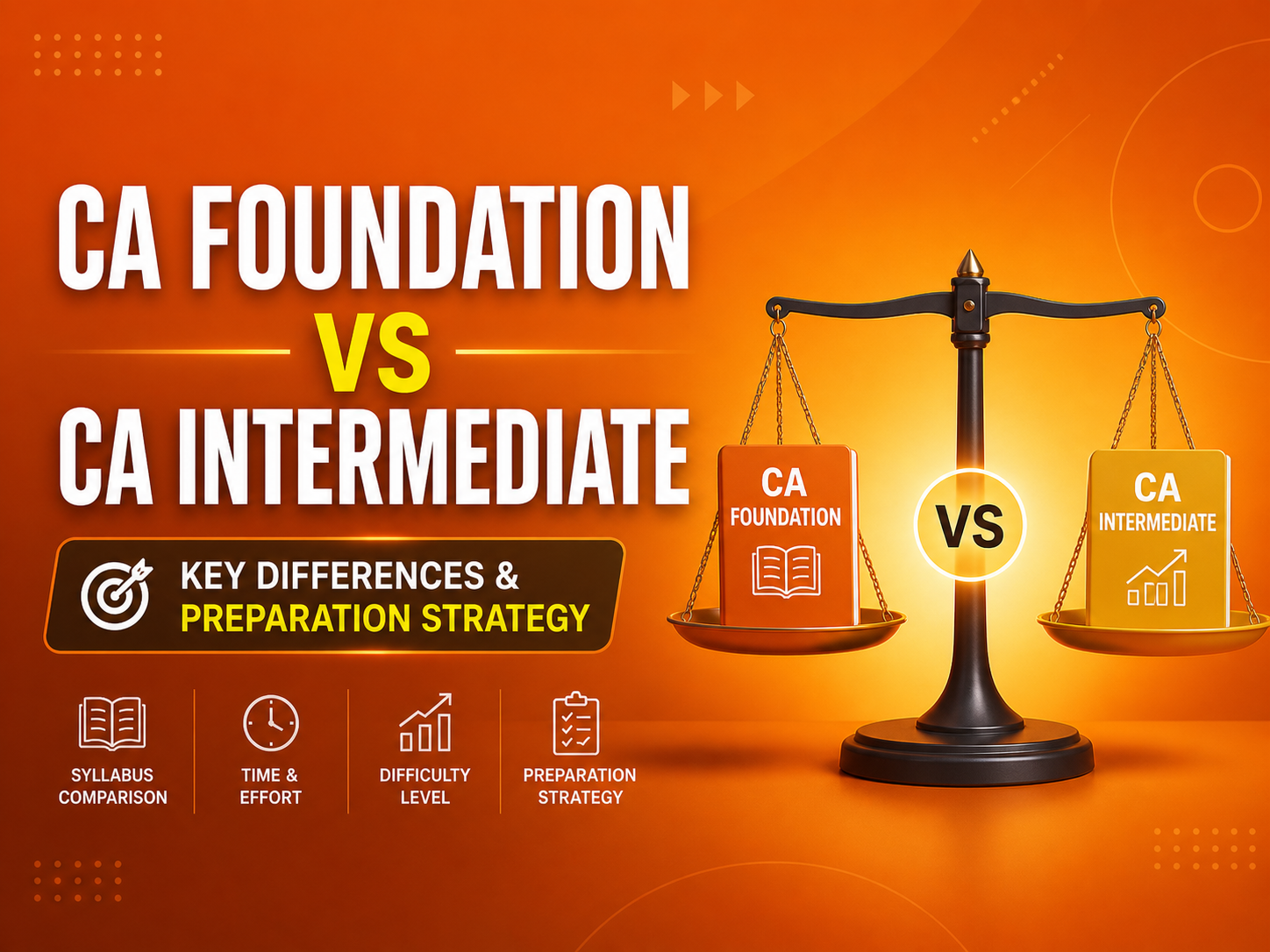
CA Foundation vs CA Intermediate — Key Differences & Preparation Strategy
CA Foundation vs CA Intermediate — Key Differences & Preparation Strategy
Everything a student needs to understand before, during, and after CA Foundation — including how to prepare for the big jump to Intermediate.
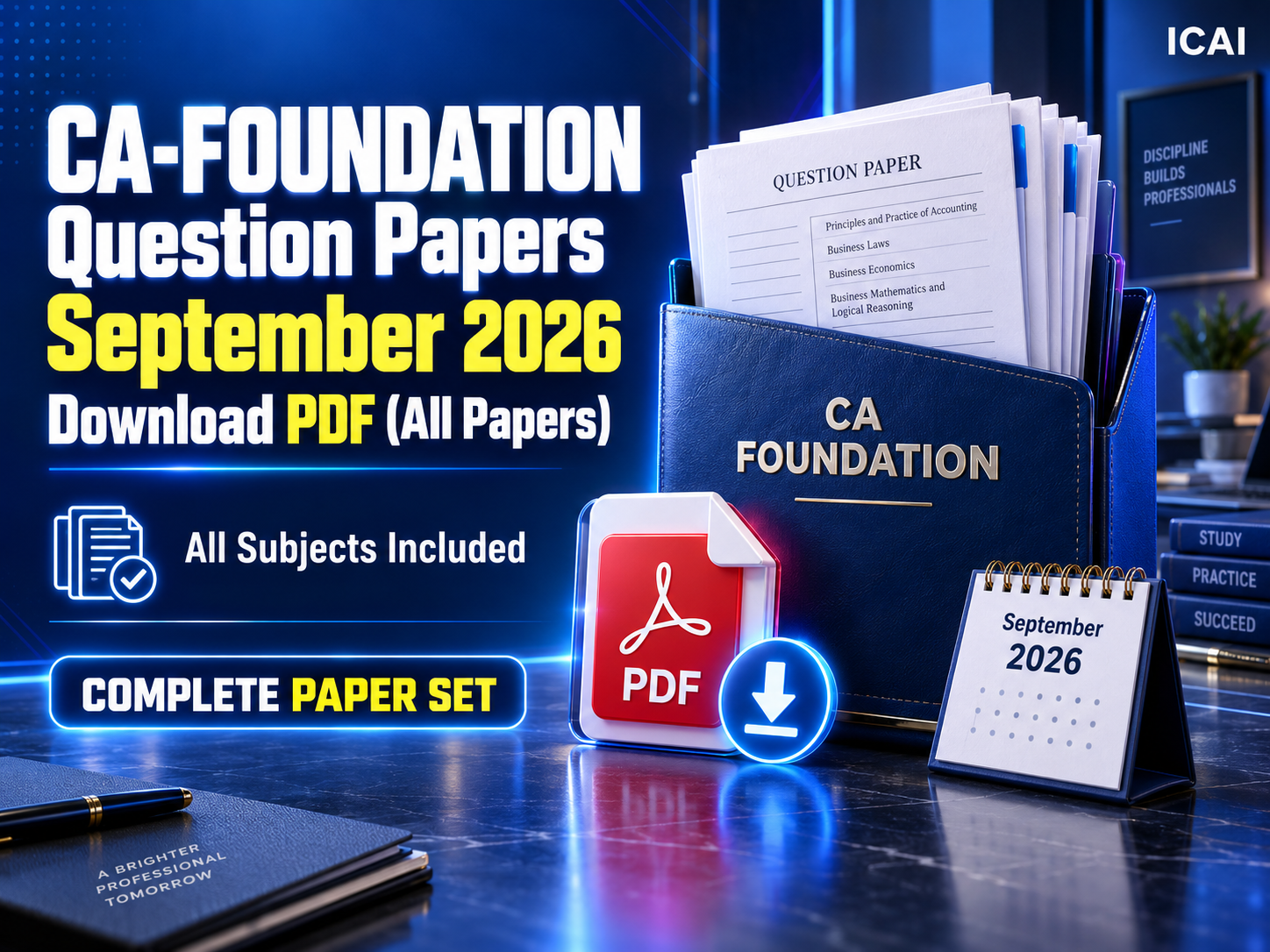
CA Foundation
Entry level — 4 papers, objective descriptive mix, ~30% pass rate
CA Intermediate
Advanced level — 6 papers (new scheme), more complex concepts, articleship after clearing both groups
Most CA aspirants think of Foundation and Intermediate as simply "easy" and "hard" versions of the same exam. They are not. These are two entirely different levels of the CA journey — with different syllabi, formats, workloads, and strategies. This guide breaks down every key difference and gives you a clear preparation roadmap for both.
⚠️ Updated for New Scheme 2024: ICAI's New Scheme of Education and Training (effective May 2024) has significantly changed CA Intermediate — from 8 papers to 6 papers, from 800 to 600 marks, and articleship from 3 years to 2 years. All information in this article reflects the current new scheme.
Quick Summary
CA Foundation has 4 papers (400 marks), takes 6–8 months, and has a ~30–35% pass rate. CA Intermediate (New Scheme 2024) has 6 papers across 2 groups of 3 (600 marks total), takes 1.5–2 years, and has a ~15–25% pass rate. Articleship is now 2 years and begins only after you clear both groups. You can still attempt each group separately.
📋 Table of Contents
What's the Actual Difference?
CA Foundation and CA Intermediate are two completely different exams — not just "easy and hard versions of the same thing." Here's a full breakdown across every major parameter.
| Parameter | CA Foundation | CA Intermediate |
|---|---|---|
| Level | Entry Level (Level 1) | Intermediate Level (Level 2) |
| Eligibility | After Class 12th (Commerce / Any) | After passing CA Foundation |
| Total Papers | 4 Papers | 6 Papers — 2 Groups of 3 (New Scheme 2024) |
| Total Marks | 400 Marks | 600 Marks |
| Paper Format | 2 Objective 2 Descriptive | All 6 — 30% MCQ 70% Descriptive (with 25% negative marking on MCQs) |
| Pass Marks | 50% aggregate, 40% per paper | 50% aggregate per group, 40% per paper |
| Pass Rate | ~30–35% | ~15–25% |
| Study Duration | 6–8 months | 1.5–2 years |
| Articleship | Not required | 2 years — starts only after clearing BOTH groups (New Scheme 2024) |
| Difficulty Level | Moderate | High to Very High |
| Group-wise Attempt? | No — must pass all 4 together | Yes — Group 1 (3 papers) and Group 2 (3 papers) separately |
| Coaching Fees (Approx.) | ₹25,000 – ₹60,000 | ₹50,000 – ₹1,20,000 |
Key Insight: CA Foundation can be cleared with 6–8 months of focused preparation. CA Intermediate (New Scheme 2024) now has 6 papers in 2 groups of 3 and requires 18–24 months of study. Importantly, articleship (now 2 years under the new scheme) begins only after clearing both groups — giving students the freedom to focus purely on exams first.
Subjects: Foundation vs Intermediate
The subjects change dramatically. Foundation has 4 introductory-level papers, while Intermediate (New Scheme 2024) has 6 advanced papers across 2 groups of 3, going deep into advanced accounting, taxation, audit, and law.
CA Foundation — 4 Papers
Introductory level · 400 marks total
Principles & Practice of AccountingBasic accounting, journals, financial statements
Business LawsIndian Contract Act, Companies Act basics
Quantitative AptitudeBusiness Maths Statistics — MCQ format
Business EconomicsMicro & macro economics — MCQ format
CA Intermediate — 6 Papers (New Scheme 2024)
Advanced level · 600 marks total · 2 groups of 3
Group 1 — Papers 1 to 3Advanced Accounting, Corporate & Other Laws, Taxation
Advanced AccountingInd AS, Consolidated Accounts, complex financial statements
Corporate & Other LawsCompanies Act 2013, LLP Act, FEMA, IBC basics
Taxation (Direct Indirect)Income Tax Act GST — highly practical, 100 marks
Group 2 — Papers 4 to 6Cost & Management Acc., Auditing & Ethics, Financial Mgmt & SM
Cost & Management AccountingCosting, budgeting, standard costing, variance analysis
Auditing & Code of EthicsStandards on Auditing (SAs), ethics, audit procedures
Financial Management & Strategic ManagementFM theory strategic concepts for business decision-making
Difficulty Level: The Real Picture
Based on pass rates, syllabus depth, and student feedback — here's how the two levels compare on actual difficulty:
Overall difficulty comparison (Foundation vs Intermediate):
Important: CA Intermediate's pass rate of ~15–25% sounds daunting, but the new scheme lets you attempt Group 1 (Papers 1–3) and Group 2 (Papers 4–6) separately. Most students clear one group at a time, making it far more manageable. Also note: under the new scheme, MCQ questions carry 25% negative marking — so never guess blindly.
Your Journey: Foundation → Intermediate Timeline
Here is the typical step-by-step path a student takes from 12th grade all the way through CA Intermediate — with realistic timeframes at each stage.
Register for CA Foundation (After 12th)
Register with ICAI immediately after 12th results. Minimum study period is 4 months. Most students take 6–8 months for solid preparation.
Appear & Pass CA Foundation Exam
Conducted twice a year — May and November. You need 50% aggregate and 40% per paper to pass all 4 papers together.
Register for CA Intermediate & Clear Both Groups
Minimum 8-month study period before your first attempt. Under the New Scheme 2024, you must clear both groups before starting articleship — unlike the old scheme where articleship ran alongside exams.
Begin 2-Year Articleship (After Clearing Both Groups)
Articleship is now 2 years under the new scheme (reduced from 3). It starts only after clearing both Intermediate groups and completing the 4-week ICITSS training. This means exam-free, focused practical training.
Attempt CA Final (After Articleship Self-Paced Modules)
After completing articleship and qualifying Self-Paced Online Modules (SET A & B mandatory), you become eligible for CA Final — 6 papers across 2 groups of 3.
How to Prepare for CA Intermediate After Foundation
The biggest challenge after clearing Foundation is the mental adjustment to Intermediate's scale and depth. Here's what actually works:
Plan Group-Wise Strategy
Don't try to prepare all 8 papers simultaneously. Focus on one group at a time for better clarity and higher pass probability.
Articleship Starts After Both Groups
Under the New Scheme, articleship (now 2 years) begins only after clearing both Intermediate groups. This means you can study full-time without splitting focus between exams and work.
Master Taxation Early
Taxation (Direct GST) is the heaviest and most practical paper. Start it from Month 1 — don't push it to last-minute revision.
Revise More, Read Less
At Intermediate level, revision matters more than reading new content. Aim for 3 full revisions per paper before the exam.
Costing is the Wild Card
Cost & Management Accounting is very scoring if practiced regularly. Don't underestimate it — it's often the "safe paper" for boosting your aggregate.
Auditing: Think Like an Auditor
Auditing is conceptual and exam-friendly. Read Standards on Auditing from ICAI study material and approach each question practically.
Pro Tip from EEI Faculty: Students who join a structured Intermediate coaching institute perform significantly better than self-study students — especially for Taxation and Advanced Accounting, which need expert guidance for current amendments.
.jpeg)